Why this exists
Sleep research has produced a substantial body of knowledge over the past forty years. Laboratory techniques like polysomnography allow researchers to observe sleep with considerable precision, tracking brain electrical activity, eye movements, muscle tone, and respiratory patterns simultaneously. The findings from this research are specific, nuanced, and frequently surprising.
And then they get summarized in a headline as "sleep seven to nine hours." Which is not wrong, exactly, but it misses almost everything interesting about the underlying finding.
Rutesa exists to cover the gap between the research and the summary. The goal is not to tell anyone what to do. It is to explain what the research found, what its limitations were, and what questions it left open.
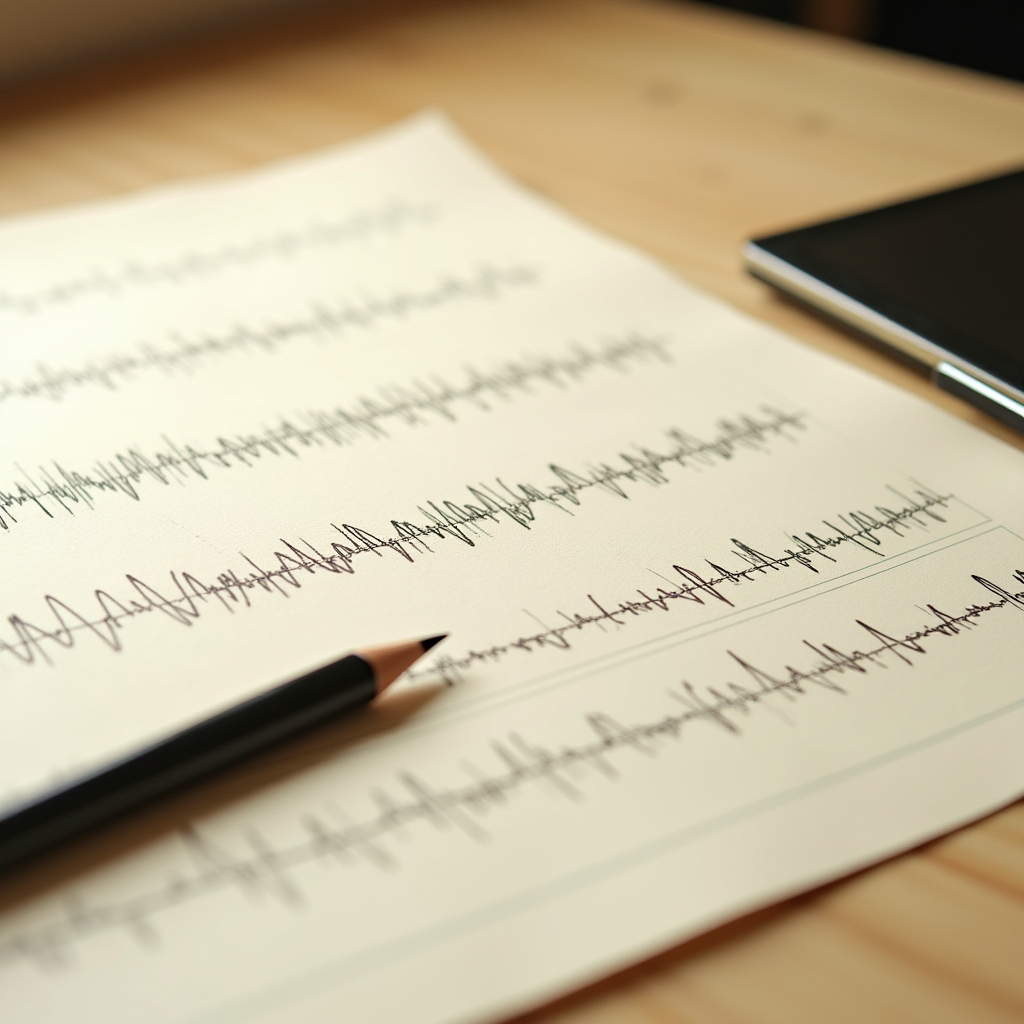
Polysomnography captures brain activity across the night, revealing the cycling structure of sleep stages that consumer devices approximate.
What sleep architecture actually means
Sleep is not a uniform state. A full night's sleep consists of multiple cycles, each lasting roughly 90 minutes, within which the brain moves through distinct stages. These stages are not interchangeable. They serve different biological functions, and disrupting one does not simply mean less sleep overall. It means less of something specific.
N3 sleep, often called slow-wave or deep sleep, is characterized by large, synchronized electrical oscillations in the brain. This is the stage most closely associated with physical restoration. Growth hormone secretion peaks during N3. Cellular repair processes accelerate. The immune system does significant work. N3 is concentrated in the first half of the night.
REM sleep, which stands for rapid eye movement, is concentrated in the second half. It is associated with memory consolidation, emotional processing, and certain types of learning. The body is largely paralyzed during REM, though the brain is highly active. Dreams, when recalled, typically come from this stage.
Light sleep, comprising N1 and N2, makes up the largest portion of the night by volume. N2 includes sleep spindles, which are bursts of electrical activity associated with memory processing and the suppression of external stimuli that might otherwise cause waking.
The point is that these stages cycle in a specific order, with specific timing, and the architecture of that cycling matters independently of total sleep duration.
Eight hours of fragmented sleep is not the same as eight hours of intact sleep. The number is the same. The biology is not.
Six versus eight hours: what the published research shows
Studies comparing six and eight hours of sleep have consistently found differences in cognitive performance, reaction time, emotional regulation, and various physiological markers. The effect sizes vary by outcome and by study design, but the direction is consistent: outcomes measured after eight hours tend to differ from outcomes measured after six.
The more interesting finding, from a mechanistic standpoint, is what changes. Cognitive impairment from sleep restriction accumulates in a way that does not feel like impairment. People who are restricted to six hours per night for two weeks perform similarly on cognitive tests to people who have been kept awake for 24 hours. But they rate their own sleepiness as only mildly elevated. The subjective experience of restriction diverges from the objective performance impact.
This matters because it means self-assessment is not a reliable guide to sleep adequacy. Feeling fine is not the same as performing fine, and performing fine in daily tasks is not the same as performing optimally in demanding ones.
The duration question also interacts with individual variation. There is genuine genetic variation in sleep need. A small proportion of the population carries variants that allow them to function well on less sleep. This is not the same as having adapted to less sleep, which is a different and less well-supported claim. The distinction between genetic short sleepers and habituated sleep-restricted individuals is meaningful, and the research treats them differently.
The caffeine timing problem
Caffeine works by occupying adenosine receptors in the brain. Adenosine is a molecule that accumulates during waking hours and creates the subjective experience of sleepiness as it builds. By blocking adenosine receptors, caffeine prevents that signal from being received.
What caffeine does not do is clear the adenosine itself. The adenosine continues to accumulate while the receptors are blocked. When caffeine's effects wear off, the accumulated adenosine binds to receptors all at once. This is the mechanism behind the caffeine crash.
Caffeine has a half-life of roughly five to six hours in most adults, though this varies significantly with genetics, liver enzyme activity, medications, and pregnancy. A cup of coffee consumed at two in the afternoon still has roughly half its caffeine active at seven or eight in the evening. That active caffeine is still occupying adenosine receptors during the early part of sleep.
The practical effect is not necessarily that you cannot fall asleep. Many people fall asleep without difficulty even with significant caffeine in their system. The effect is on sleep architecture. Studies using polysomnography have found that caffeine consumed in the afternoon reduces slow-wave sleep, even when subjects report sleeping normally and feel rested. The deep sleep stage is specifically reduced. The subjective experience and the objective measurement diverge.
What consumer sleep trackers actually measure
Consumer wearable devices measure sleep primarily through two proxies: movement and heart rate variability. Movement is measured by accelerometers. The assumption is that wakefulness involves movement and sleep involves stillness. Heart rate variability changes across sleep stages in ways that correlate, imperfectly, with the stages measured by polysomnography.
These are real signals. The correlation between consumer device staging and polysomnography is not zero. But it is not high enough to treat the device output as equivalent to clinical measurement. Studies comparing consumer devices to polysomnography have found that devices tend to overestimate total sleep time, particularly in people with disrupted sleep, because stillness is classified as sleep even when the brain is awake. Devices also tend to misclassify sleep stages with some regularity, and the error patterns differ by device and by individual.
This does not mean trackers are useless. Tracking trends over time, across consistent conditions, can reveal patterns that a single night of polysomnography would miss. But interpreting a single night's sleep score as an accurate representation of sleep architecture is giving the device more credit than the underlying measurement supports.
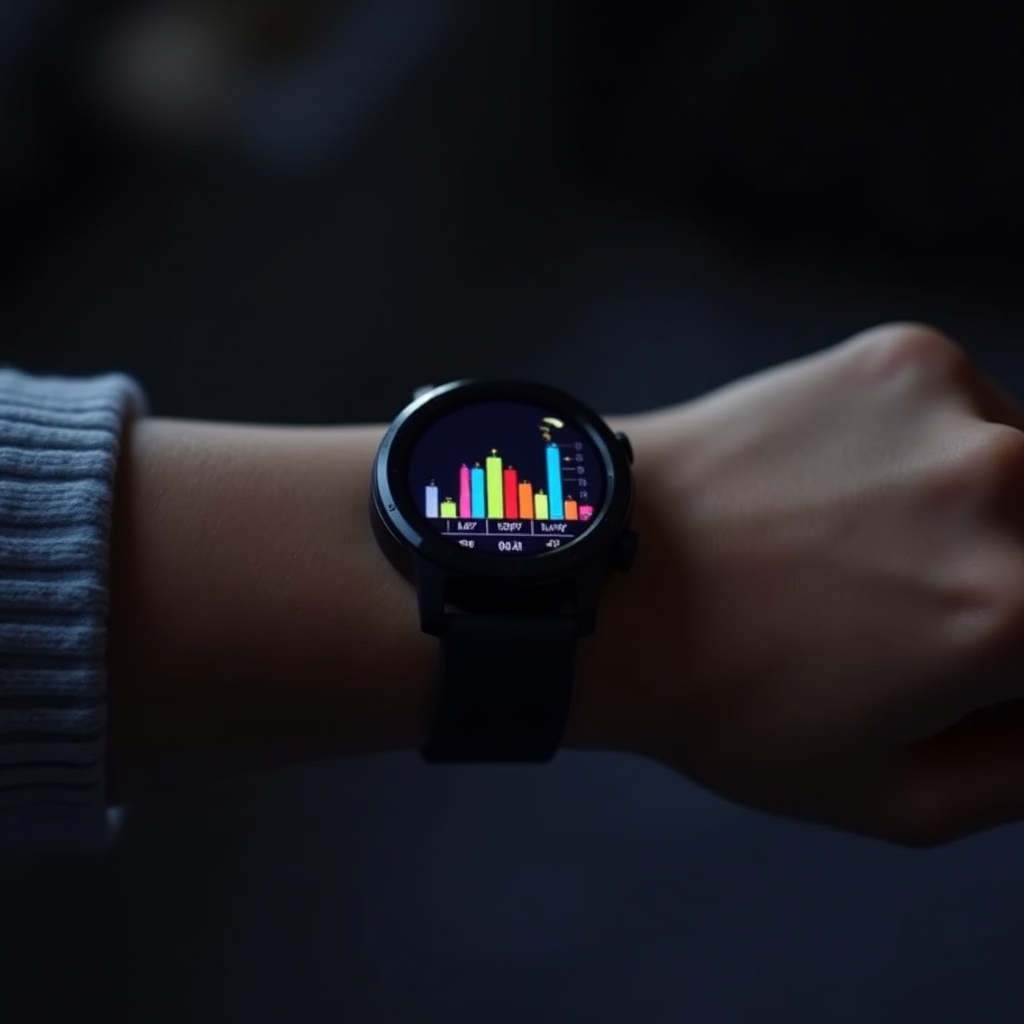
Consumer devices provide useful trend data. They are not equivalent to clinical sleep measurement, and the error patterns matter for interpretation.
Where the evidence ends
Sleep research has limits that the popular coverage tends to understate. Much of the foundational work was done in controlled laboratory conditions that differ substantially from real-world sleep. Subjects in sleep labs know they are being observed, which itself affects sleep. Studies often use small samples. Many findings have not been replicated across different populations or different methodologies.
The environmental research is particularly early. Studies on temperature, light, and noise effects on sleep architecture exist, but the optimal values they suggest are derived from specific populations under specific conditions. Applying them as universal rules overstates the certainty in the evidence.
This is not a reason to dismiss the research. It is a reason to hold findings in proportion. The broad patterns are well-established. The precise values and individual prescriptions are not. Rutesa tries to keep that distinction visible in everything it writes.